Project · energy markets & climate
Heatwave Tracker & Impact
What I found tracking UK heat against demand and price, and what it means for a retail supplier.
Thank you to everyone who used my heatwave detector through July. It was a difficult year, statistically and emotionally. I've ordered a heat pump to prepare my family for what's coming, and I'm now doing the research on what we can achieve professionally, as I'm sure many good people are doing ahead of me.
Please read my new opinion piece, Heatwaves and Hydrophobia, on what to expect next from weather in the UK. Sadly we understand what follows a heatwave much better now, a small consolation prize during a drought.
The insight
Heat moves price before it moves demand
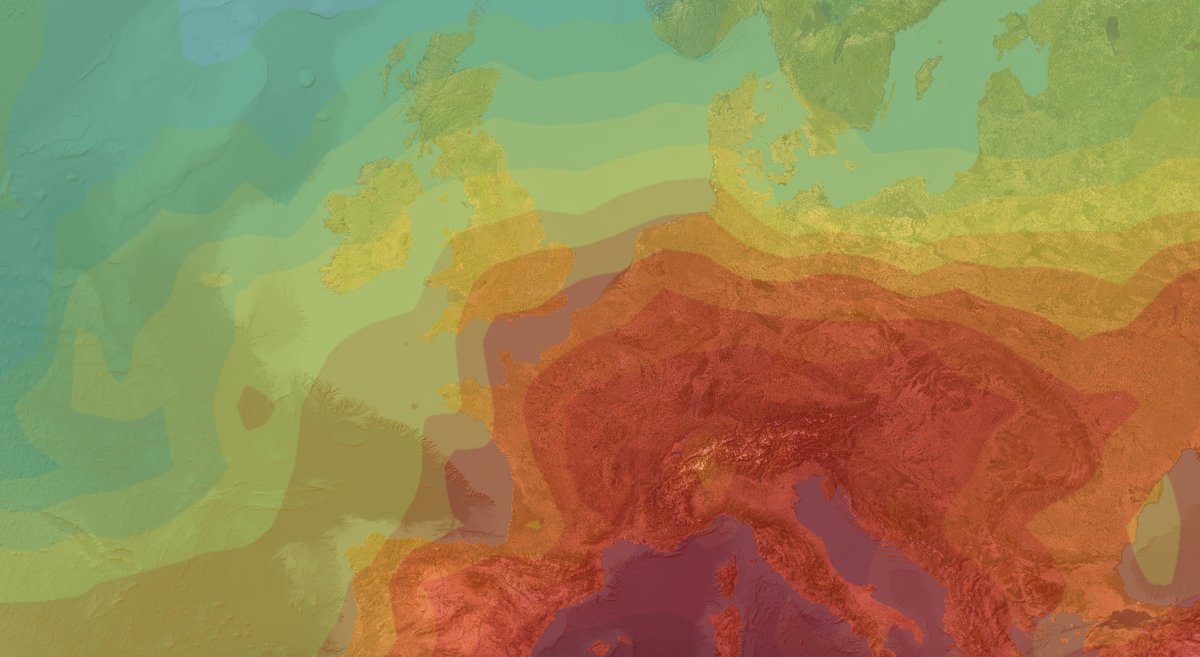
I tracked heat against demand and against the imbalance price. Demand moved late, and not by much. Price moved first and moved more, because summer margins are thin and plant is on outage. That's the risk I'd want a retail supplier to see.
What I did
I hosted a web app using Docker that tracked UK temperature against the imbalance price through the summer of 2026. It ran from late June to the end of July, through the four heatwaves that summer.
I put the forecast on a map. Around it I showed heatwave and red-alert probabilities over 7 and 14 days, a rolling imbalance price profile against the mean, and the day's heat coverage. I could scrub the whole screen forward through the forecast.
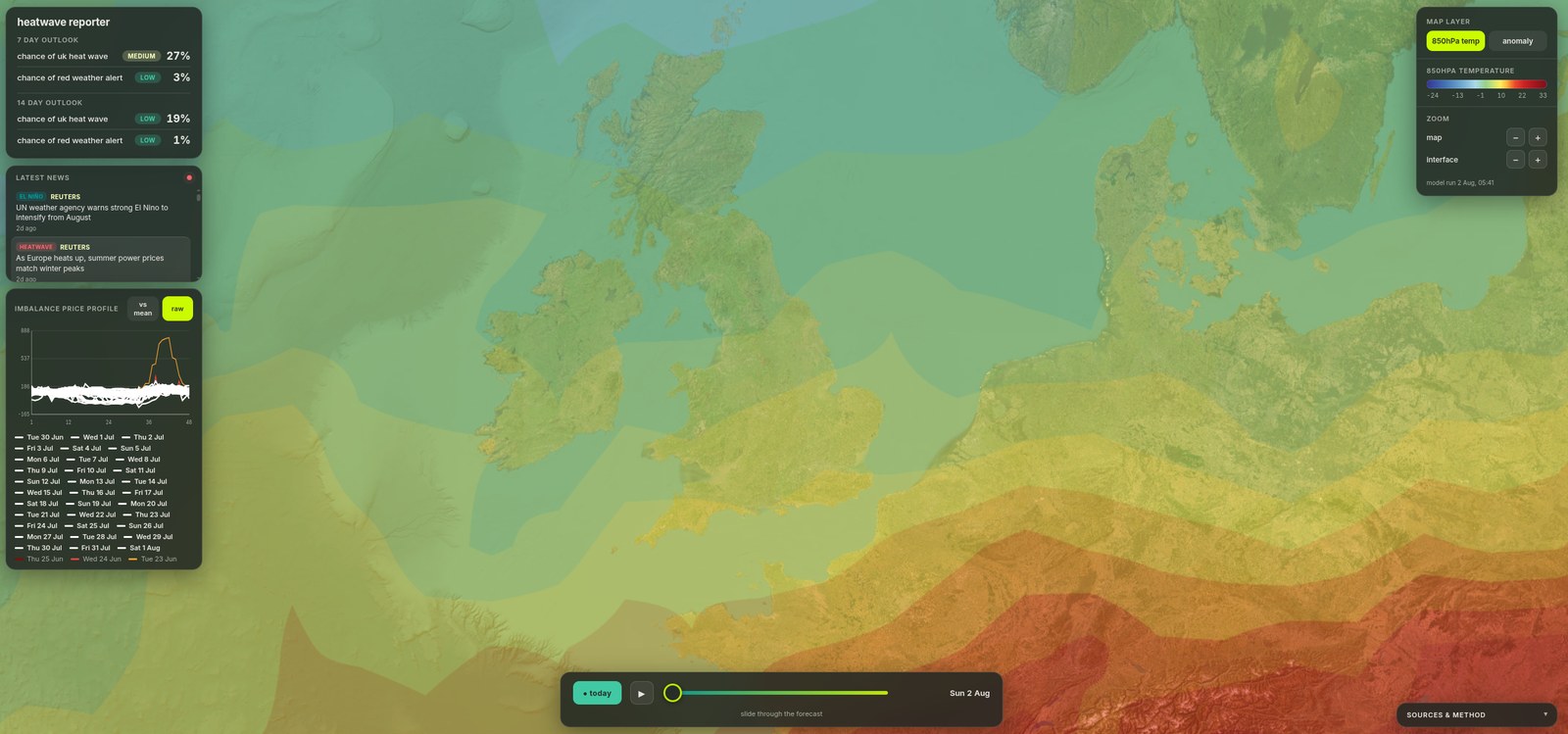
I ran FastAPI behind Caddy, in Docker on a GCP VM built with Terraform. SQLite for the store, vanilla JS on the front end. Temperature and the 1991–2020 climatology came from Open-Meteo, the imbalance prices from Elexon's BMRS system-prices endpoint.
Why I retired it
I built it to watch one summer, and that summer is over. I'm more interested now in what comes after the heat: dry ground sheds rain instead of absorbing it, and the flooding starts. I've carried that on in Heatwaves and Hydrophobia.
Notes & sources
- More than half of England formally in drought as of late July 2026. BBC News, "More than half of England in drought, Environment Agency declares", 29 July 2026.